
Parking garage coatings and traffic membranes
Water and road salt are the main threats to a parking structure. Traffic membranes seal the deck, protect reinforcing steel and give vehicles and pedestrians a durable, textured surface.
Why parking decks need protection
Vehicles carry water and de-icing salt into parking structures all winter. Chlorides soak into the concrete, reach the reinforcing steel and cause corrosion. Steel expands as it rusts, which cracks and spalls the concrete. On suspended decks, water can also leak through to the level below.
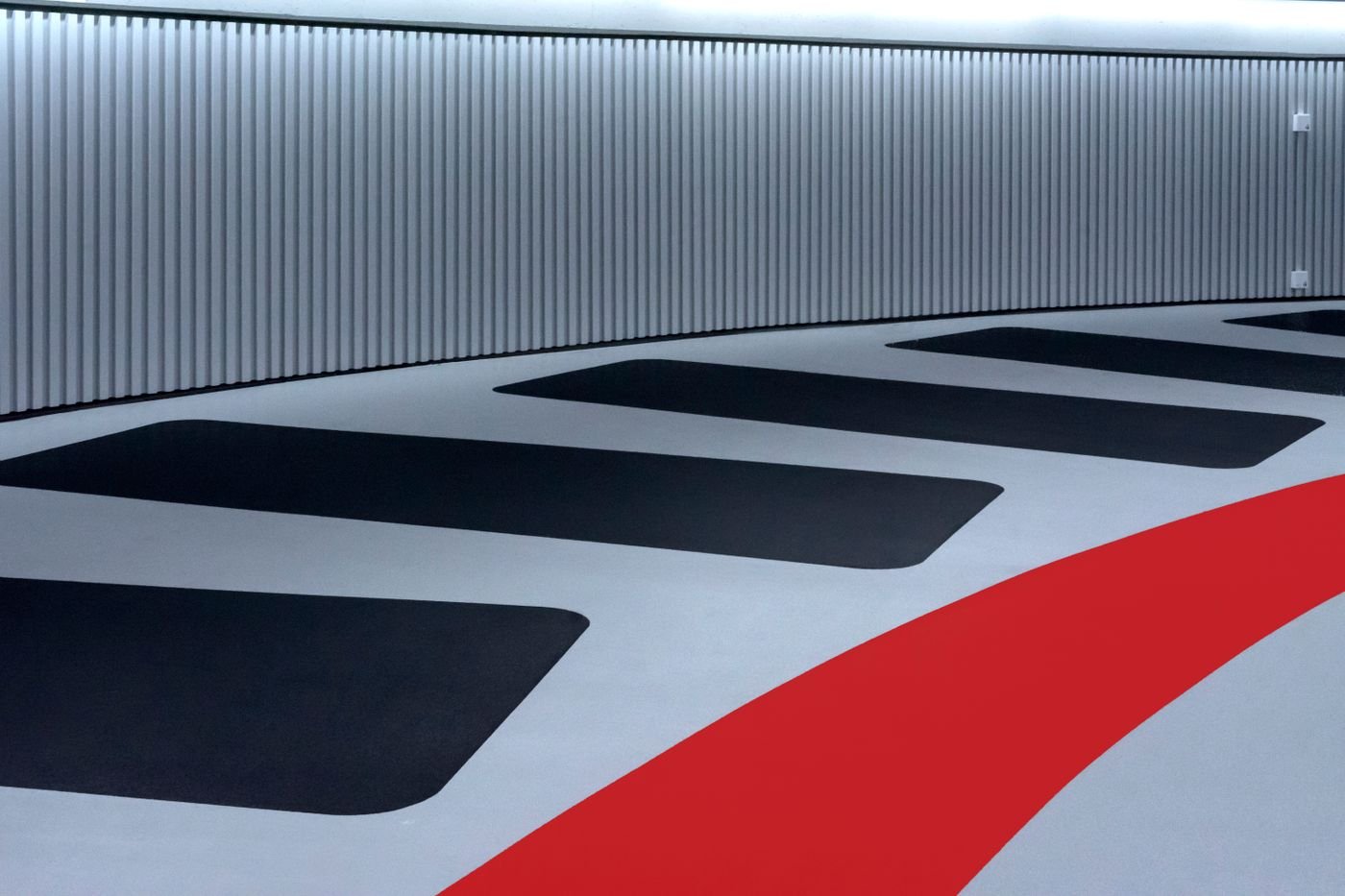
A traffic membrane stops water and chlorides at the surface. It also gives a skid-resistant driving and walking surface and can be colour-coded for drive aisles, stalls and pedestrian routes.
How we coat a parking deck
Work starts with surface prep, usually shot blasting or grinding to remove contaminants and open the concrete. Cracks are routed and sealed, and spalled areas are rebuilt with suitable repair mortar. Joints, drains and wall transitions are detailed so water cannot get behind the membrane.
The membrane is then built in layers: primer, a flexible base membrane, and a wear coat with broadcast aggregate. Drive aisles, ramps and turning areas get heavier wear coats than parking stalls. After cure, line painting and markings are restored.
Planning around tenants and vehicles
Parking structures usually stay in use during the work. We phase by level or section, coordinate closures with property management, and plan around move-ins and peak hours. Condo, office, hospital and commercial garages each have different access needs, and the schedule reflects that.
Regular maintenance extends membrane life. Spring washing removes built-up salt, and periodic reviews catch worn wear coats, failed sealants and damaged areas early, while they are still simple to repair.
How a parking garage coatings system is built
Every layer has a job. Here's what goes down, from the slab up.
A flexible membrane keeps water and salt out of the deck. The textured wear coat takes tire traffic.
- Each coat goes down at the specified thickness
- Cure times are planned into your schedule
- The full system is listed in your formal quote
What you get
What the job includes
- Condition review of slab, cracks and joints
- Shot blasting or grinding
- Crack routing and sealing, spall repair
- Primer, base membrane and aggregate wear coat
- Joint, drain and wall detailing
- Line painting and markings
How a project runs
Every project starts with an instant estimate or a call, then a site assessment and a written quote before any work is scheduled.
Common in
Parking Garage Coatings FAQ
Can the garage stay open during the work?
Usually, yes. We phase the work by level or section so parts of the garage remain in use. Closures are coordinated with property management and communicated in advance.
How long does a traffic membrane last?
Service life depends on traffic volume, turning areas, salt exposure and maintenance. Wear coats in high-traffic areas wear first and can be recoated without replacing the whole membrane. Washing salt off the deck each spring helps extend its life.
Do you repair the concrete before coating?
Yes. Cracks, spalls and failing joints are repaired before the membrane goes on, because coating over damaged concrete only hides the problem. We identify repair areas during the site assessment.
What drives the cost?
Area, the amount of concrete repair, membrane type, phasing requirements and access. Ramps and drive aisles need heavier systems than stalls. Contact us and we will confirm pricing after a site assessment.
Related services

Concrete Waterproofing
Liquid-applied waterproofing membranes for mechanical rooms, balconies, decks and slabs over occupied space.

Concrete & Crack Repair
Crack, spall and slab repairs that restore damaged concrete and prepare it for coatings or traffic.

Control & Expansion Joints
Semi-rigid polyurea joint filling and expansion joint repair that protects slab edges from wheel damage.
See what your floor will cost
Answer a few quick questions and see your estimate in about two minutes. A formal quote follows a site assessment.