
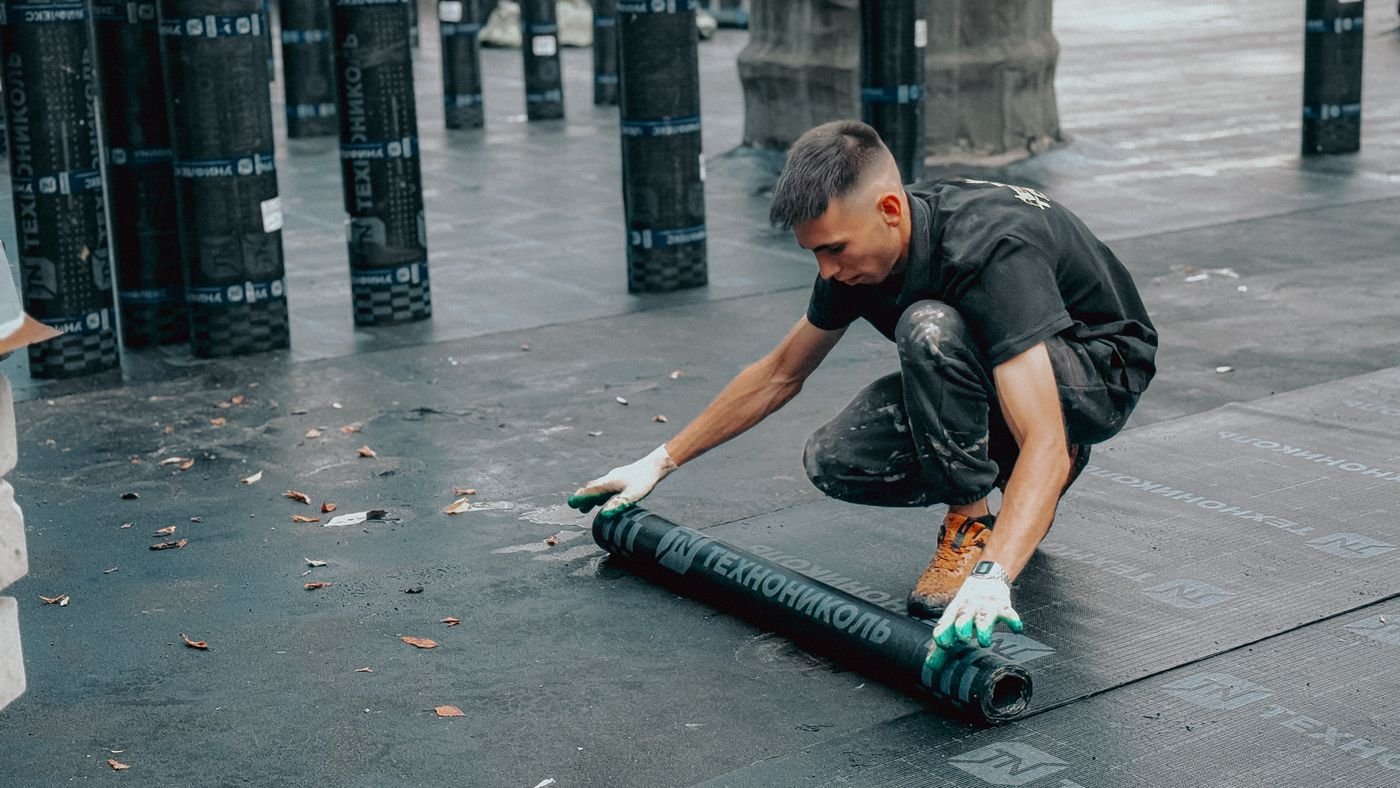
Concrete waterproofing for decks, mechanical rooms and wet areas
When water gets through a slab, it damages the space below and the concrete itself. We install liquid-applied waterproofing membranes that seal horizontal concrete and stand up to use.
Where waterproofing is needed
Any slab with occupied space below is at risk when water sits on it. Mechanical rooms with pumps and tanks, commercial kitchens, washrooms, balconies, terraces and podium decks are common sources of leaks. Cracks, failed joints and worn coatings let water through, often far from where it shows up below.
Liquid-applied membranes form a continuous, seamless layer that bonds to the concrete and follows its shape. They can run up walls, around pipe penetrations and into drains without the laps and seams of sheet membranes.
Our approach
We start by finding the path the water is taking. That means reviewing cracks, joints, drains, penetrations and the condition of any existing coating. The surface is ground or blasted, cracks are routed and filled, and joints are detailed with flexible sealant or reinforcing fabric.
The membrane is then applied at the specified thickness, usually in multiple coats so full coverage can be confirmed. Depending on use, it is finished with a wear-resistant topcoat, an anti-slip texture, or a protection layer for tile or toppings. Where possible, we flood test before handover.
Working with other floor systems
Waterproofing often works alongside other floor work. In a commercial kitchen, a membrane can go under a urethane cement floor. In a mechanical room, it can be paired with a chemical-resistant coating and curbs around equipment. Planning the layers together gives one compatible system instead of separate products that may not bond.
How a concrete waterproofing system is built
Every layer has a job. Here's what goes down, from the slab up.
A continuous membrane bridges small cracks and stops water from reaching the concrete below.
- Each coat goes down at the specified thickness
- Cure times are planned into your schedule
- The full system is listed in your formal quote
What you get
What the job includes
- Leak investigation and water path review
- Grinding or blasting of the slab
- Crack routing and joint detailing
- Flashing at penetrations and drains
- Liquid-applied membrane in multiple coats
- Topcoat or protection layer, with flood testing where possible
How a project runs
Every project starts with an instant estimate or a call, then a site assessment and a written quote before any work is scheduled.
Common in
Concrete Waterproofing FAQ
Can you fix a leak without removing the floor finish?
It depends on the finish. If the slab is exposed or coated, we can usually waterproof directly over prepared concrete. If tile or another finish covers it, that finish typically has to come off so the membrane can bond to the slab.
Is waterproofing the same as a floor coating?
Not exactly. Many floor coatings are rigid and will crack when the slab moves. Waterproofing membranes are more flexible and designed to bridge cracks, so we often combine a membrane for waterproofing with a coating for wear.
How long does the work take?
Small rooms can take a few days, including prep, membrane coats and topcoat. Larger decks are phased. Cure times vary with product and temperature, so we confirm the schedule after the site assessment.
What drives the cost?
Area, prep, the number of cracks, joints and penetrations, and the type of finish over the membrane. Contact us and we will confirm pricing after a site assessment.
Related services
Parking Garage Coatings
Traffic membranes and deck coatings that protect parking structures from water, road salt and wear.

Concrete & Crack Repair
Crack, spall and slab repairs that restore damaged concrete and prepare it for coatings or traffic.

Slope-to-Drain
Re-sloping floors to drains with troweled mortar systems so water runs off instead of ponding.
See what your floor will cost
Answer a few quick questions and see your estimate in about two minutes. A formal quote follows a site assessment.