
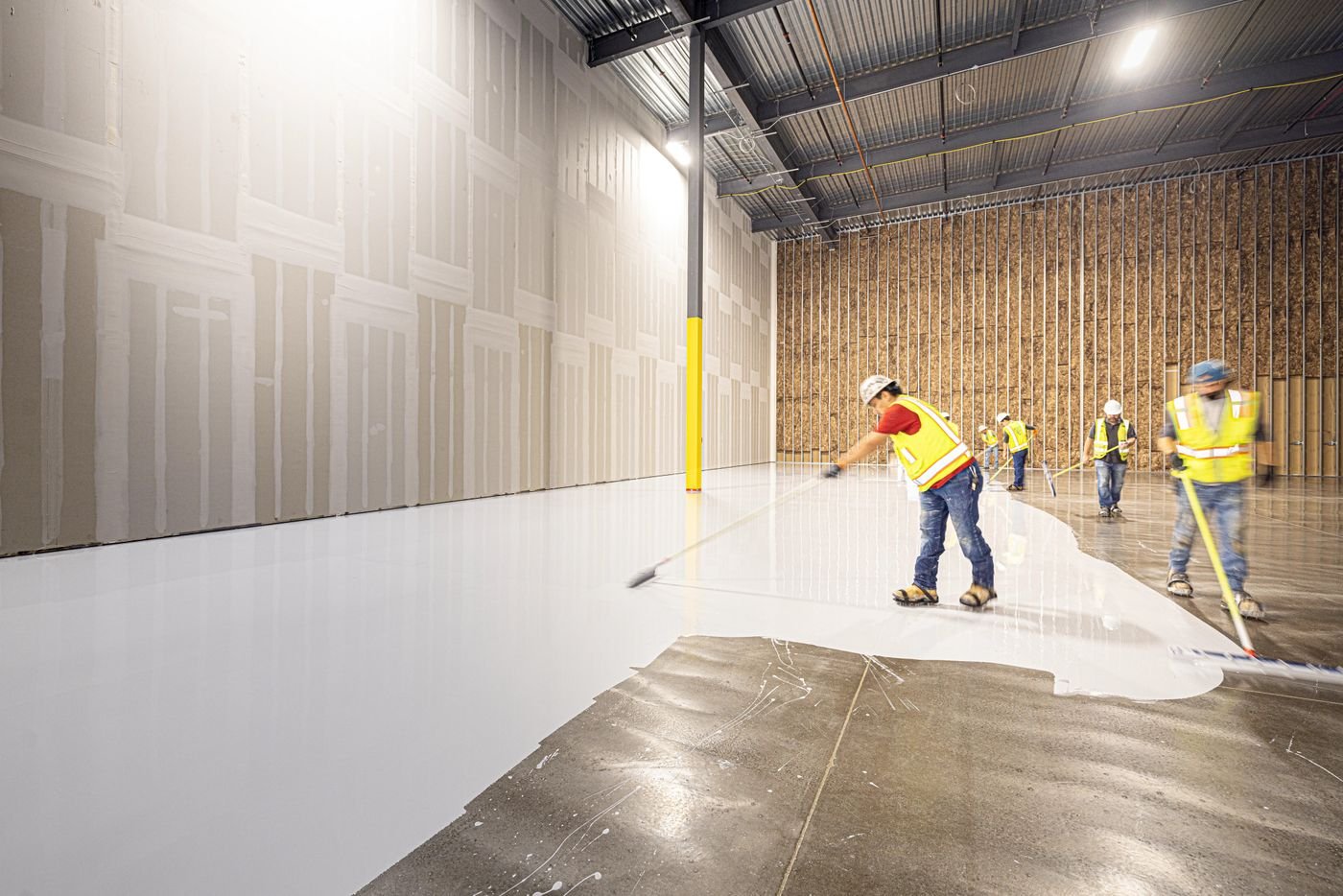
Self-leveling underlayment and floor leveling for commercial slabs
Uneven, patched or out-of-level slabs cause problems for every floor finish. We correct them with cement-based self-leveling products so the next layer goes down flat.
When a slab needs leveling
Old slabs settle, crack and collect years of patches. New slabs can have high and low spots from finishing. Tile, LVT, sheet goods and thin coatings all show these flaws, and resilient flooring can fail early over an uneven base. Self-leveling underlayment fixes the problem before the finish goes down.
We check flatness with straightedges and levels to map high and low areas. High spots are ground down. Low areas, dips and transitions are filled with self-leveling material poured to the required depth.
Flatness matters most under thin finishes and wheeled equipment. LVT, sheet goods and large-format tile have tight flatness tolerances, and some racking and automated equipment is sensitive to floor variation. We work to the tolerance your finish or equipment requires.
How we install self-leveling
The slab is ground or shot blasted to remove coatings, adhesives and weak surface material. Cracks and joints are treated, and the perimeter is dammed where needed. A primer is applied to seal the concrete and improve bond, which also prevents pinholes caused by air escaping from the slab.
The material is mixed to the correct water ratio, pumped or poured, and spread with gauge rakes and smoothers. Depending on the product, it can often be walked on within hours. Flooring or coatings go on once it meets the drying and moisture requirements of the next layer.
How a self-leveling & floor leveling system is built
Every layer has a job. Here's what goes down, from the slab up.
Self-leveling compound flows out flat over dips and rough areas, giving the new floor a smooth, even base.
- Each coat goes down at the specified thickness
- Cure times are planned into your schedule
- The full system is listed in your formal quote
What you get
What the job includes
- Flatness survey and mapping of high and low areas
- Grinding of high spots and removal of adhesive or coatings
- Crack and joint treatment
- Primer application
- Pouring or pumping of self-leveling underlayment
- Feathering of transitions at doors and existing floors
How a project runs
Every project starts with an instant estimate or a call, then a site assessment and a written quote before any work is scheduled.
Common in
Self-Leveling & Floor Leveling FAQ
How thick can self-leveling be poured?
Most underlayments can be feathered thin at the edges and poured up to a product-specific maximum in a single lift, often a few centimetres. Deeper fills may need aggregate extension or multiple lifts. We choose the product based on the depth required.
How soon can flooring go on top?
Foot traffic is often possible within a few hours. Flooring or coatings can go on once the underlayment meets the drying and moisture requirements of the next material, which varies by product and thickness.
What drives the cost?
Average depth matters most, since material volume adds up quickly. Prep, area and access for pumping also play a role. Use the instant estimate for a range, and we confirm after a site assessment and flatness check.
Can self-leveling be used to slope a floor to a drain?
No. Self-leveling material flows flat, so it is not used to build slopes. For drainage we use troweled epoxy or urethane mortar, which is covered on our slope-to-drain page.
Related services
Concrete Grinding & Surface Prep
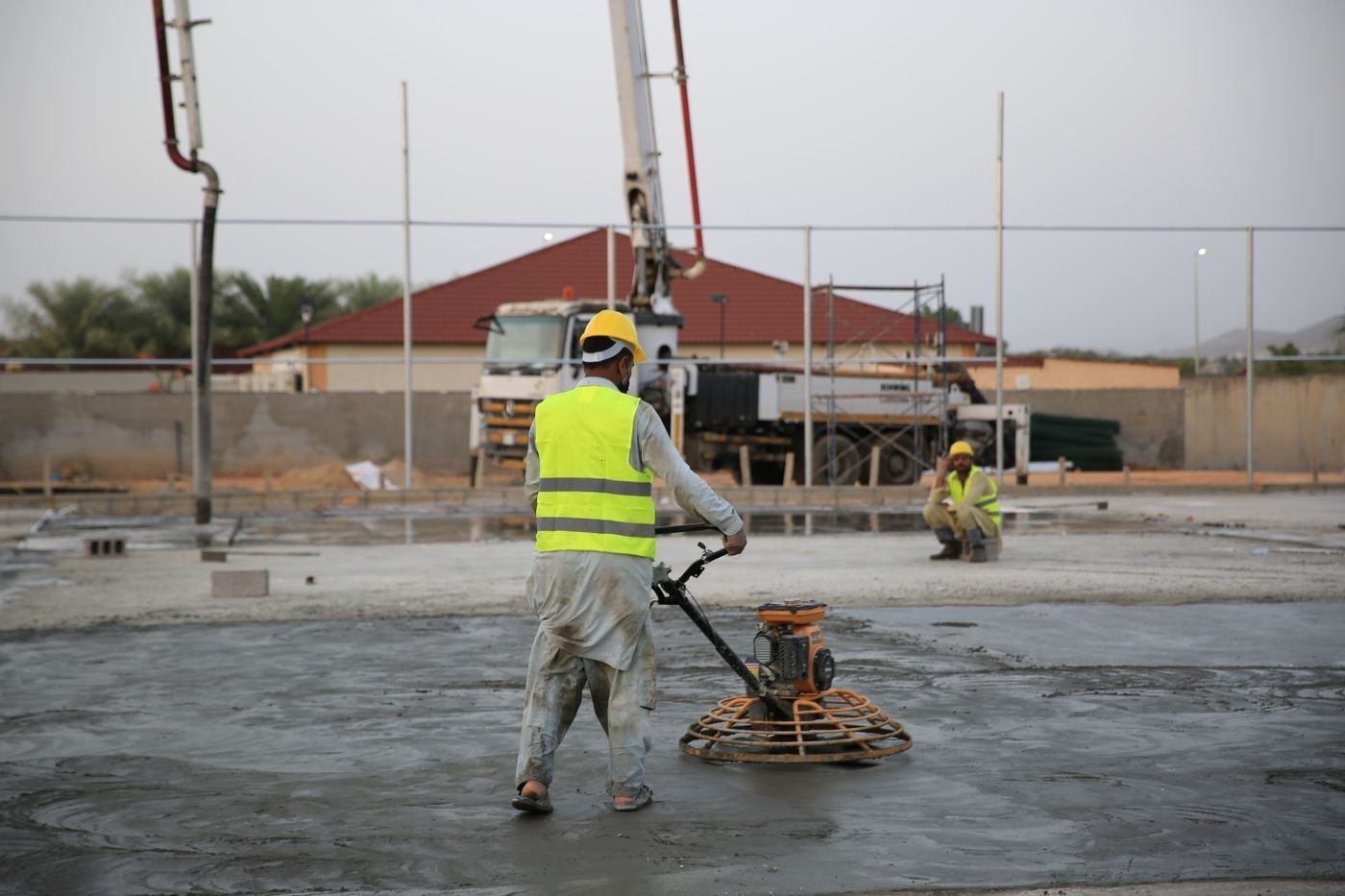
Diamond grinding and shot blasting to the correct surface profile for coatings, overlays and polishing.
Flooring Removal
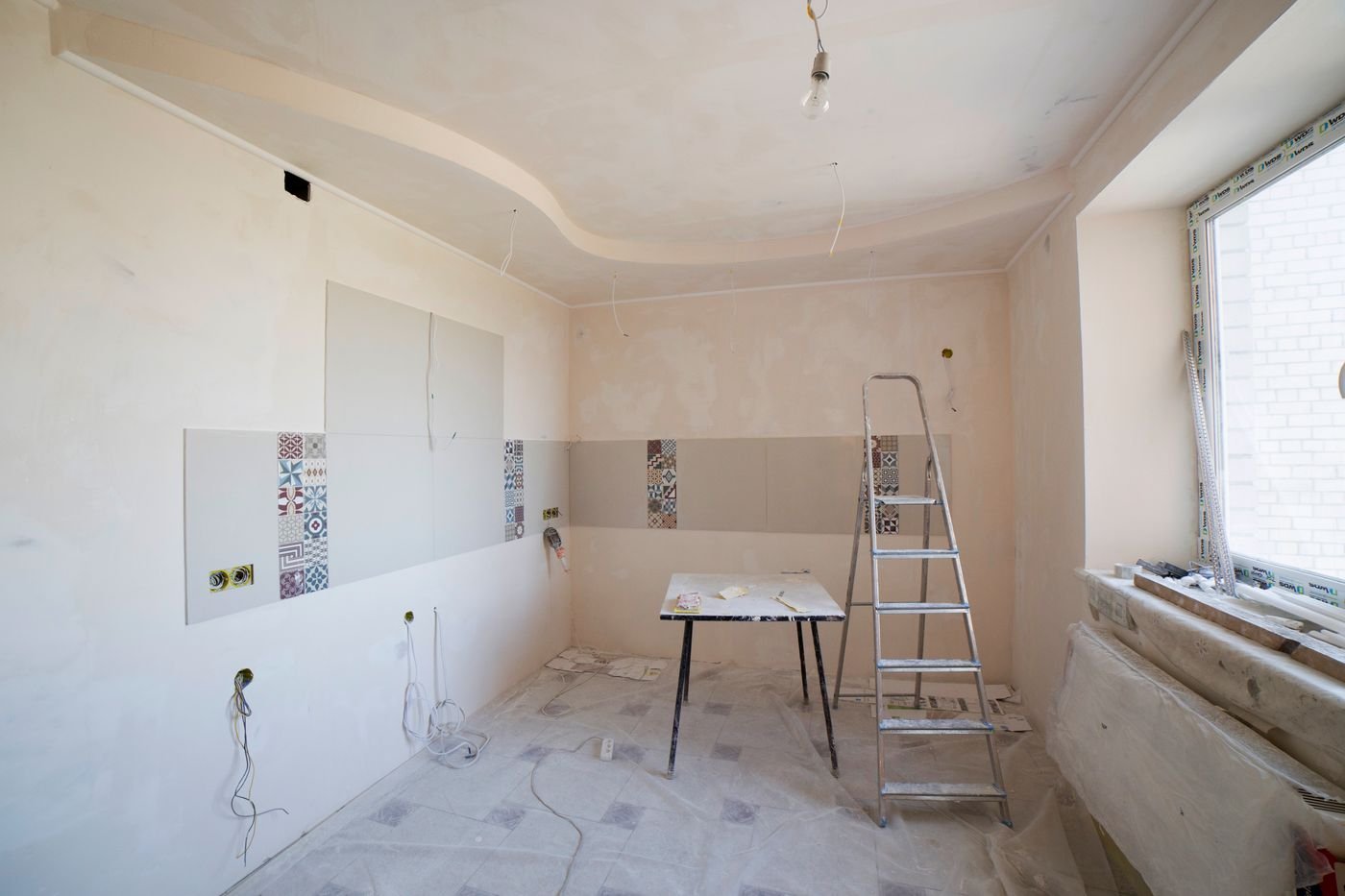
Removal of tile, VCT, carpet, coatings and adhesives down to clean concrete, ready for new flooring.

Slope-to-Drain
Re-sloping floors to drains with troweled mortar systems so water runs off instead of ponding.
See what your floor will cost
Answer a few quick questions and see your estimate in about two minutes. A formal quote follows a site assessment.